






What is teeth grinding (bruxism)?
Bruxism is when you clench, grind or gnash your teeth. It can happen while you are awake or asleep and usually happens without you realising. Grinding during sleep can cause more harm than grinding while awake, because you do not notice it. Dentists are often the first to notice the signs, such as worn edges, chips or cracks on the teeth.
What signs can point to teeth grinding?
According to the NHS, teeth grinding and clenching can come with:
- a painful jaw, which can lead to temporomandibular disorder (TMD)
- worn-down or broken teeth, which can cause sensitivity and loss of teeth and fillings
- headaches
- earache
- disturbed sleep
It is often the person sleeping next to you, rather than you, who notices that you grind your teeth at night.
What causes it?
It is not always clear why people grind their teeth. The NHS says stress and anxiety are the most common cause; sleep problems such as snoring and sleep apnoea, some medicines for sleep problems, depression or anxiety, smoking and drinking a lot of alcohol or caffeine are also linked to grinding. The American Dental Association (ADA) adds that teeth that do not line up properly and missing or crooked teeth can also play a role.
Protecting your new smile
Over time, grinding can lead to worn teeth, chips and cracks, lost fillings and jaw pain. So if you are planning veneers, crowns, bonding or implants, make sure you tell your dentist at your examination that you clench or grind your teeth. Your dentist will look at the signs of wear on your teeth and decide whether you need any protective measures.
We compare cosmetic options in our articles composite bonding or porcelain veneers and porcelain veneers or zirconia crowns.
What is a night guard and how does it protect your teeth?
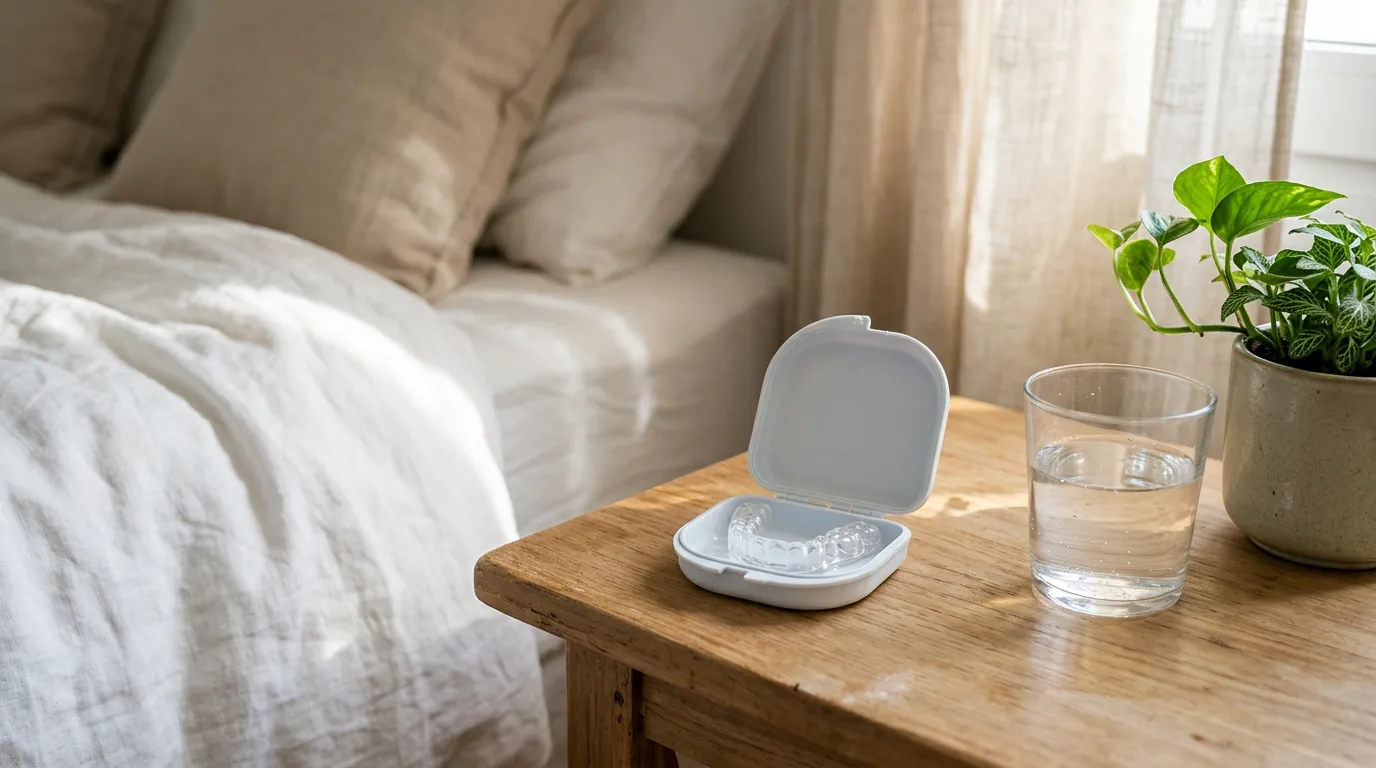
Your dentist may recommend a mouth guard or splint. These are worn at night, protect your teeth from damage and can be made to fit precisely over your upper or lower teeth. According to Cleveland Clinic, a custom guard can also place your jaw in a more favourable position to reduce strain on the jaw muscles; you wear it when you are most likely to grind.
- Custom or ready-made: A guard made from a mould taken by your dentist gives the closest fit; guards sold online or in shops may not provide the same protection.
- Not a sports guard: Mouth guards for sport have extra cushioning and may not be comfortable for sleep.
- Support for the causes: A guard is there to protect your teeth; possible causes such as stress or sleep problems may need separate support.
Our night guard page explains how night guards are planned and made at DOC.
What can help in daily life?
- Find ways to relax, such as breathing exercises, listening to music and regular exercise.
- Try to go to bed at the same time every night, relax before bedtime and keep your bedroom dark and quiet.
- Do not smoke, and do not drink too much alcohol or caffeine.
- If you have jaw pain or swelling, you can use an ice pack wrapped in a tea towel for 20 to 30 minutes; do not chew gum or eat hard foods if your teeth or jaw hurt.
- Keep up with regular dental check-ups.
When should you see a dentist?
See a dentist if:
- you grind your teeth and have tooth damage or sensitive teeth
- you grind your teeth and have pain in your jaw, face or ear
- your partner says you grind your teeth in your sleep
- you are worried about your child grinding their teeth
Your family doctor can also help with possible causes such as stress, anxiety, smoking or alcohol.
If you are coming to Fethiye for treatment
For patients travelling from abroad, the treatment plan is confirmed after the examination at the clinic. Mention any clenching, or grinding your partner has noticed, in your preliminary assessment and at your examination; your dentist will take it into account in your treatment plan. You can find the steps on our international patients page.
Frequently Asked Questions
A night guard is there to protect your teeth from the damage that clenching and grinding can cause. Possible causes such as stress or sleep problems may need separate support; your dentist will decide on the right approach for you.
Ready-made guards are sold, but according to the ADA they may not provide the same protection as a custom guard made from a mould taken by your dentist.
No. According to the NHS, treatment is not always needed, and Cleveland Clinic notes that mild or occasional grinding usually does not need formal treatment. If you have symptoms, talk to your dentist.
According to Cleveland Clinic, children often outgrow teeth grinding by adolescence. If you are worried about your child grinding their teeth, see a dentist.