





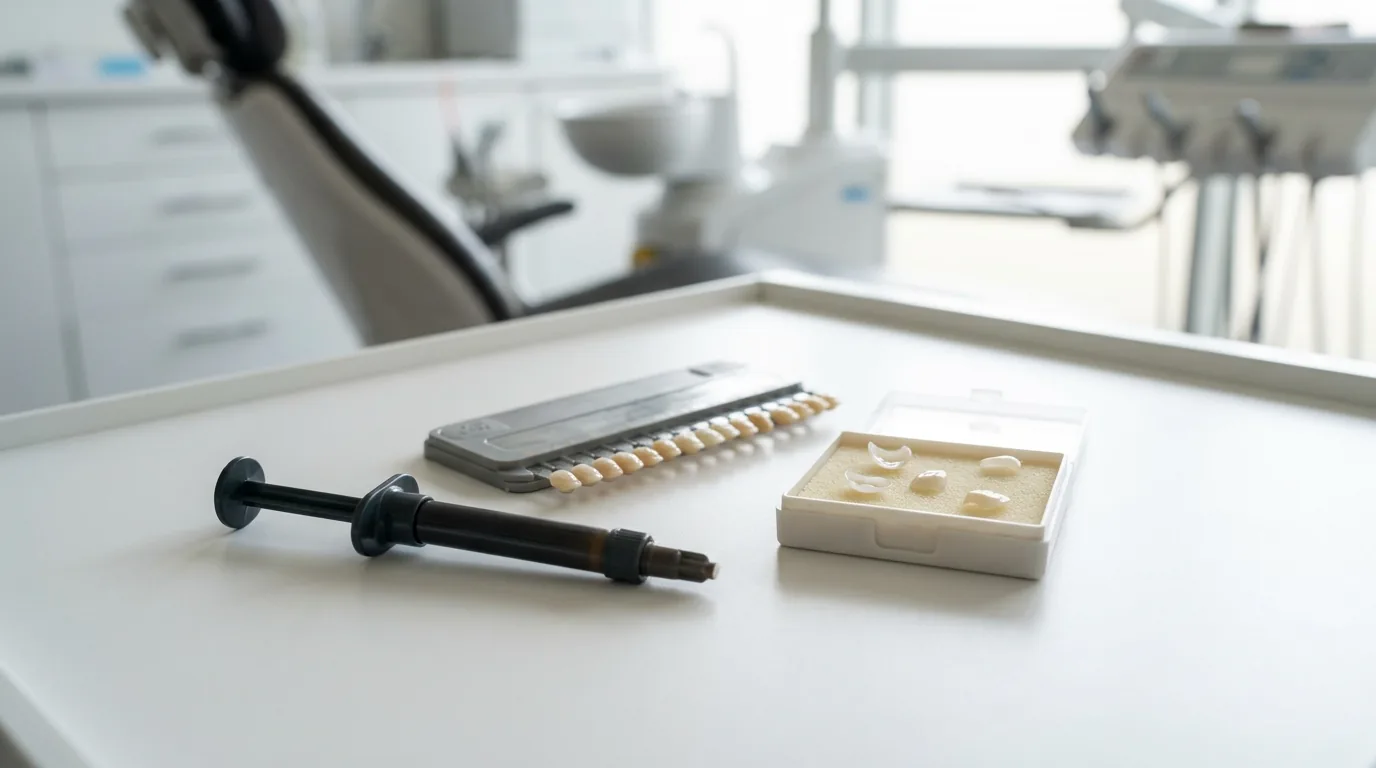
Key differences
| Composite bonding | Porcelain veneers | |
|---|---|---|
| Method | Tooth-coloured resin is shaped in the mouth and hardened with a curing light | Made in a laboratory and bonded to the tooth at a later appointment |
| Appointments | Usually one appointment; about 30–60 minutes per tooth | At least two appointments; laboratory work can take a few weeks |
| Tooth preparation | Enamel is usually not removed; the treatment is reversible | Some enamel is removed; most types are not reversible |
| Stain resistance | Somewhat stain-resistant, but not as much as porcelain | More resistant to staining than natural enamel |
| Lifespan | Usually needs a touch-up or replacement after 3–10 years | On average 10–15 years with proper care |
The information in the table comes from Cleveland Clinic's bonding and veneer pages. Its bonding page gives a range of 10–20 years for porcelain veneers. These periods vary with personal habits, oral care and the clinical situation; they are not a guarantee of how long a restoration will last for any individual.
Which one is considered when?
- Small chips, cracks, gaps or changes to shape and colour: composite bonding is an option for small cosmetic changes like these.
- More noticeable changes: Cleveland Clinic notes that more dramatic changes may need other treatments, such as porcelain veneers.
- Tooth decay or gum disease: veneers are only an option without extensive cavities and gum disease; before bonding, problems such as decay may also need other treatment first.
Which option suits you is decided by the dentist after examining your teeth and gums.
For details, see the composite bonding and porcelain laminate veneer pages, and the porcelain veneers vs zirconia crowns article.
Frequently Asked Questions
Because bonding is usually done without removing enamel and can be reversed, a different option can be considered later. This decision is made at an examination, based on the condition of your teeth at that time.
Regular brushing, flossing and check-ups matter for both options. With bonding, coffee, tea, red wine and smoking can increase staining, and biting your nails, chewing pens or using your teeth to open packages can cause chips. With veneers, it is also advised not to bite directly into hard foods and not to use your teeth as tools.
Sources
Sources reviewed on 26 November 2026.