






What is a panoramic X-ray?
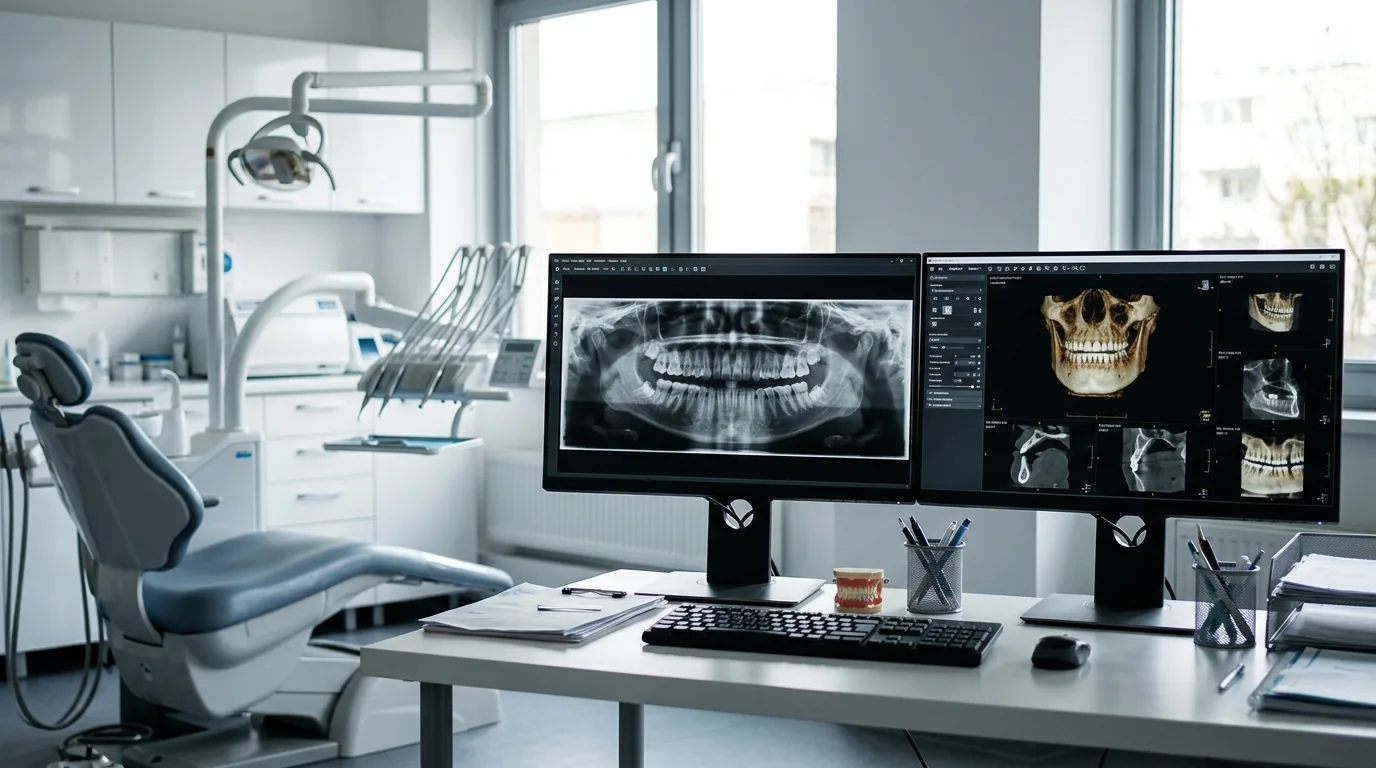
A panoramic X-ray shows the upper and lower jaws, the teeth and surrounding structures in a single two-dimensional image. In a first assessment it gives an overview of the jaws and helps to spot impacted or missing teeth and changes such as cysts. Details: panoramic dental X-ray.
What is dental CBCT?
Cone-beam computed tomography (CBCT) builds a three-dimensional image of a selected part of the jaw and teeth from images taken in a single rotation. This allows structures such as root and canal anatomy, or the relationship to the mandibular canal, to be examined in three dimensions. Details: dental cone-beam CT (CBCT).
Radiation dose
According to the FDA, dental CBCT doses are generally lower than medical CT but higher than conventional dental X-rays. The FDA and the American Dental Association (ADA) recommend dental X-ray examinations, including CBCT, only when necessary for diagnosis or treatment.
Which one is requested when?
- General assessment: whether imaging is needed, and which kind, is decided after the history, clinical examination and any previous images have been reviewed; panoramic or intraoral X-rays can be chosen when needed.
- Implant planning: CBCT may be requested.
- Impacted upper canine: when two-dimensional images do not give enough information, CBCT can show where the tooth lies and how it relates to the roots of neighbouring teeth.
- Root canal treatment: after the clinical findings and existing images have been assessed, for example when they are inconclusive or in persistent or recurrent root canal disease, CBCT may be considered to see root and canal anatomy.
The dentist decides which image is needed after the examination.
Frequently Asked Questions
It may be considered when the information needed cannot be obtained with lower-dose two-dimensional images (for example a suspected lesion, trauma or locating an impacted tooth). The decision rests on clinical need and on the diagnostic benefit outweighing the radiation risk; this matters especially because children are more sensitive to radiation.
No. CBCT is not used routinely; it is requested only when it can provide clinical information that lower-dose imaging cannot.
Sources
- U.S. Food and Drug Administration — Dental Cone-beam Computed Tomography
- An Overview of Cone-Beam Computed Tomography and Dental Panoramic Radiography in Dentistry in the Community (PMC)
- American Dental Association and American Academy of Oral and Maxillofacial Radiology — Patient selection for dental radiography and cone-beam computed tomography: Clinical recommendations (JADA, 2026)
Sources checked on 24–25 November 2026.