



A town at the western edge of the Mediterranean
Fethiye lies at the westernmost corner of Türkiye's Mediterranean coast. Once part of the homeland of the ancient Lycian civilisation, it is still a well-loved stop for boat trips today. Sea, pine-clad hills and traces thousands of years old meet in the same view.
Planning your treatment
For our patients from abroad, the process begins before the journey with an initial assessment. Your treatment plan becomes clear after your examination at the clinic, and your appointment schedule is then set according to that plan. We describe the steps on our international patients page, and what to clarify before you travel in our article on dental treatment in Turkey.
Who will welcome you at DOC?
Your treatment is planned and carried out by our dentists, while our patient coordination team helps with appointment planning and stays in touch during your clinic visit. We have two clinics in the Fethiye area: DOC Fethiye and DOC Ölüdeniz. For what to consider when choosing a dentist and clinic, see our guide to choosing a dentist in Fethiye.
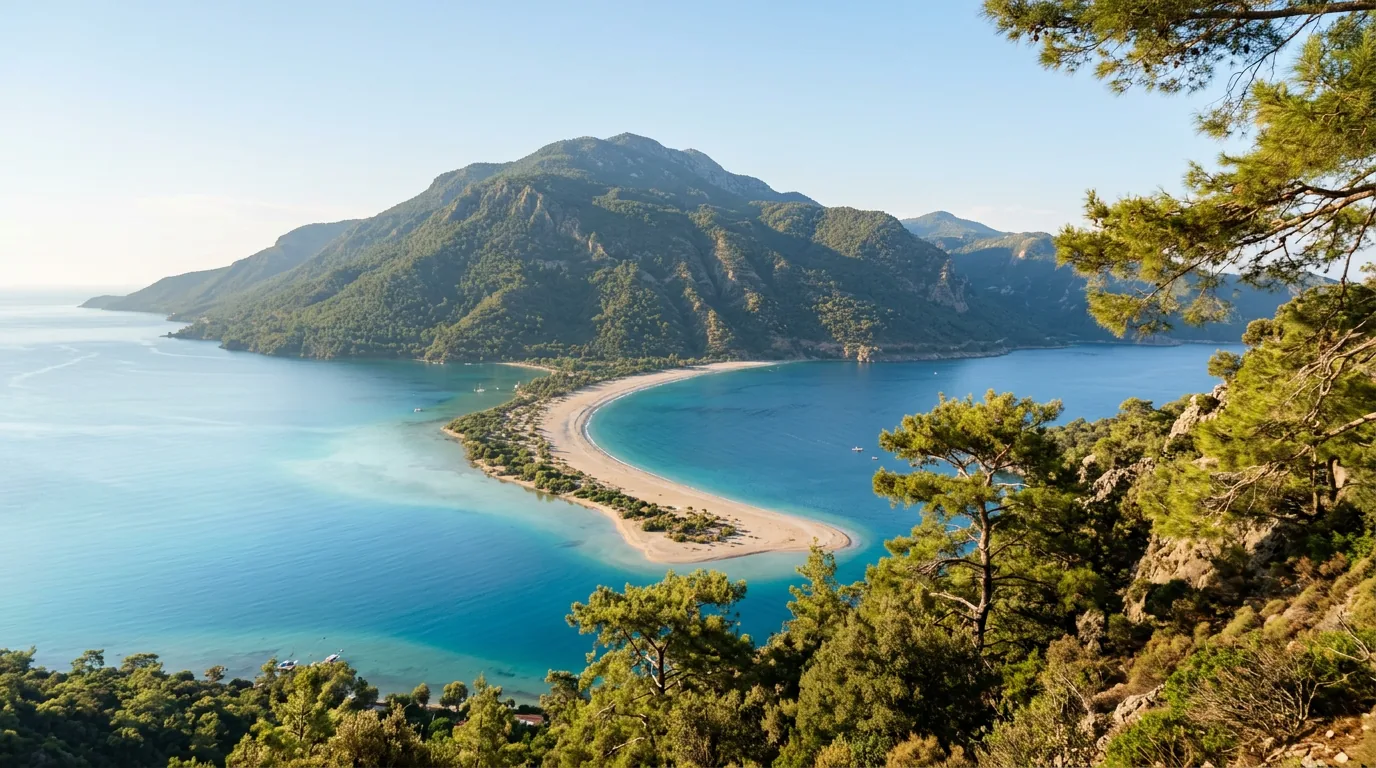
Ölüdeniz: the calm blue of the lagoon
Ölüdeniz is a sheltered natural lagoon that locals call "a haven gifted by God". Shades of blue and green blend along its 3-kilometre beach, and the mountain right behind it is famous for paragliding. Also on Fethiye's coast, Butterfly Valley, tucked between the sea and steep cliffs, is a first-degree natural protected area and home to more than 80 butterfly species.
Kayaköy: the memory of stone houses
Eight kilometres south of Fethiye, Kayaköy was known in antiquity as Karmylassos. The mostly two-storey stone houses lining the hillside were built by the Greek community that lived here in the late Ottoman period. After the population exchange in the early years of the Republic, the town was left empty; today it still has two large churches, many chapels, a school and a customs building. You can also visit Kayaköy on the road from Fethiye to Ölüdeniz.
Lycia in the heart of town: the Tomb of Amyntas
Today's Fethiye stands on Telmessos, the last large Lycian city in the west, and most of the ancient remains lie beneath the modern town. The best known of the tombs carved into the steep rock face is the Tomb of Amyntas, dating from the 4th century BC, whose facade reproduces a temple front in the rock; it is regarded as a masterpiece of Lycian funerary architecture. The ancient theatre in the town centre was discovered in 1993.
A little further: Saklıkent and Xanthos-Letoon
Saklıkent Canyon, in Saklıkent National Park, was carved by water wearing away the rock over thousands of years and reaches a depth of about 300 metres; according to GoTürkiye, summer is the best time to visit. Xanthos-Letoon, made up of Xanthos, the capital of Lycia, and the neighbouring settlement of Letoon, lies on the border of Muğla and Antalya provinces and has been on the UNESCO World Heritage List since 1988.
Plan your visit around your treatment schedule
We recommend deciding how much time to spend exploring Fethiye once your treatment plan is clear. Every treatment follows its own course, so ask the dentist treating you what is suitable on which day. Our coordination team can also help you plan your appointments around this schedule.
Frequently Asked Questions
Fethiye is a district of Muğla province at the westernmost corner of Türkiye's Mediterranean coast.
Yes. Contact details and directions are on the DOC Ölüdeniz page.
This depends on your treatment and personal situation. Decide on outings and activities together with the dentist treating you.
Yes. Xanthos-Letoon was inscribed on the UNESCO World Heritage List in 1988.