





What do All-on-4 and All-on-6 mean?
A full arch is the row of teeth in one jaw. In these approaches, implants support a fixed prosthesis replacing that row. A separate implant is not required underneath every replacement tooth. “Full arch” and “both jaws” do not describe the same treatment scope; ask to see separate plans and costs for the upper and lower jaws.
With All-on-4, posterior implants may be angled to make use of available bone. However, the name does not guarantee that grafting will be unnecessary or that every stage will be completed in one day. All-on-6 should not be understood simply as a package with two extra implants. Ask why the proposed support suits your particular restoration.
What matters besides the number of implants?
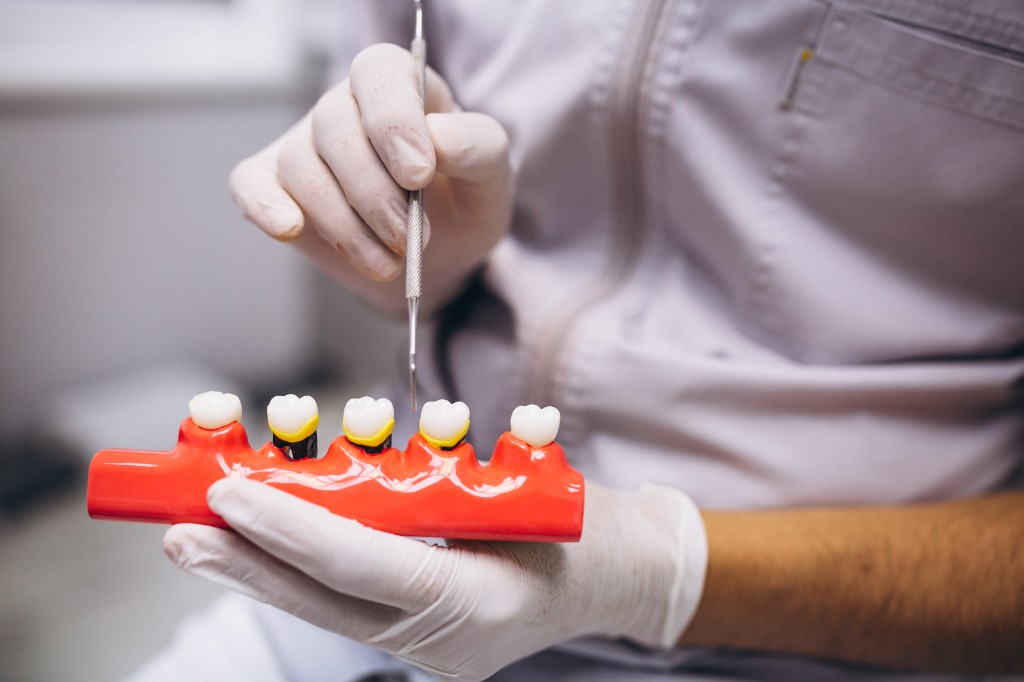
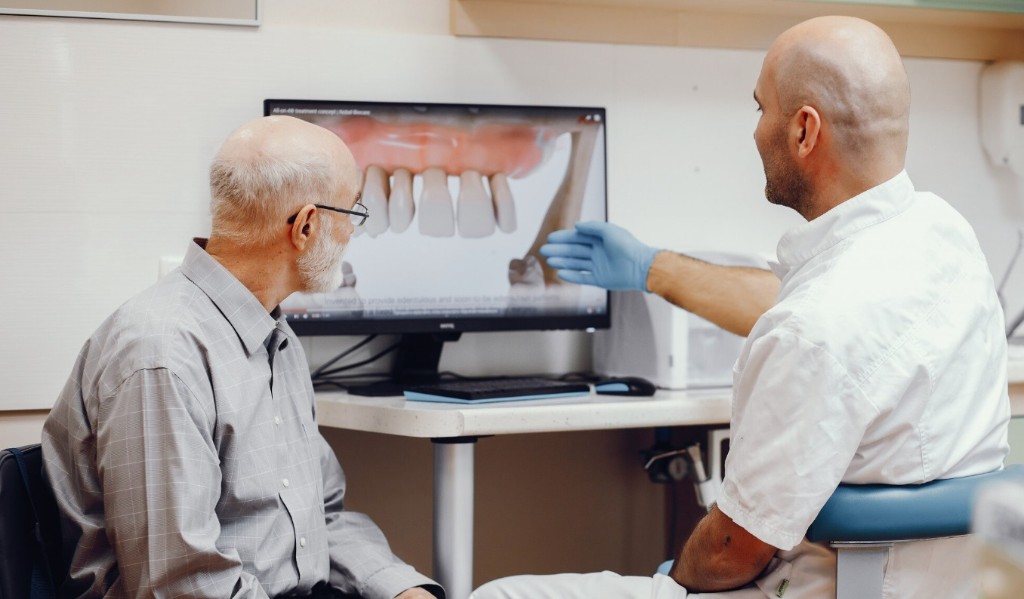
Implant distribution, prosthesis design and access for cleaning form part of treatment planning. Rather than asking only “how many implants?”, request an explanation using a model or diagram. This can help distinguish the supporting implants from the extent of the replacement teeth.
| Comparison | All-on-4 | All-on-6 |
|---|---|---|
| Implant support in one jaw | Four implants | Six implants |
| Number of replacement teeth | Determined separately in the prosthetic plan | Determined separately in the prosthetic plan |
| Placement | Planned around bone and prosthetic requirements | Suitability for six support sites is assessed |
| Bone grafting | Avoiding grafting cannot be guaranteed | Need depends on individual assessment |
| Same-day temporary restoration | Considered when clinical conditions allow | Considered when clinical conditions allow |
| Superiority | Not automatically right for every patient | More implants alone do not guarantee a better result |
| Maintenance | Cleaning beneath the bridge and reviews | Cleaning beneath the bridge and reviews |
This comparison does not replace an examination. If you receive different recommendations, ask each dentist which findings support the proposal. Compare the complete plan rather than counting implants alone.
How is full-arch implant treatment planned?
Existing teeth and personal priorities come first
The possibility of keeping remaining teeth should be considered; planning a full-arch prosthesis does not automatically justify extracting every tooth. Ask which teeth are being considered for extraction, why and what alternatives exist. Explain what troubles you most, whether that is a loose denture, chewing difficulty or appearance.
Bone and general health are assessed together
Examination and appropriate imaging assess the bone and nearby anatomical structures. Medical history, medicines and smoking also matter. Do not stop prescribed medicines yourself; any proposed changes need coordination with the relevant clinicians.
The implant count recommended for the upper jaw need not match the lower jaw. Request a separate explanation for each. If the available bone does not suit the proposed support, further procedures or different prosthetic options may be discussed.
The restoration is discussed before surgery
Ask about the temporary and final prostheses, their materials, attachment design and cleaning method. Lip support, the visible smile and the space available for the prosthesis are also planning considerations. Do not assume these decisions will all be left until after implants are placed.
What does “same-day teeth” mean?
A same-day fixed temporary prosthesis may be considered in selected suitable cases; it cannot be promised to everyone. Implant placement and attaching a restoration are separate decisions. Ask what conditions would allow early use in your case and what the alternative plan is if those conditions are not met.
Receiving a temporary restoration does not mean bone healing is complete. In some conventional pathways, integration takes around three to six months and may take longer with additional procedures or individual factors. This does not mean you must stay continuously in Turkey throughout that period.
Request written instructions for eating and care while using temporary teeth. Clarify which review determines readiness for the final restoration. Treat “teeth in a day” as a phrase that needs explanation, rather than confirmation that all treatment is finished.
Maintenance and possible complications
A fixed bridge is not a maintenance-free bridge. Ask the team to demonstrate which tools to use beneath it and how to use them. Home care and professional reviews help prevent peri-implant disease. Review intervals should reflect individual needs.
Implants may fail to integrate, and components can loosen or wear over time. Agree whom to contact and how corrective treatment would be handled. A problem involving one implant requires assessment of the remaining support and restoration; having six implants does not mean repairs will never be needed.
Planning treatment visits and costs in Fethiye
When researching full-arch implants in Fethiye, ask your written quotation to clarify:
- Does the plan cover one jaw or both?
- Are implants, connecting components, temporary teeth and the final prosthesis included?
- How are extractions or grafting charged?
- How many visits are anticipated, and what could change the timetable?
- What are the arrangements for reviews, maintenance and possible repairs?
If travelling from abroad, plan care after returning home and access to treatment records. Calculate flights and accommodation separately from the clinical quotation. Check the written inclusions rather than relying on the name of a package.
Frequently asked questions
No. Implant count alone cannot determine the choice. Ask for the individual clinical reason, the prosthetic scope and the care plan behind either recommendation.
No. Four refers to the supporting implants in one jaw. The number of replacement teeth is planned separately.
No. Bone assessment may identify a need for additional procedures or a different approach.
“Same-day” may refer to a temporary restoration. Ask whether yours would be temporary or definitive, and which stages would follow.
Not automatically. The possibility of retaining each tooth and the reason for any proposed extraction should be assessed.
It differs from a removable denture designed for the patient to take out. The team should explain any professional removal and the cleaning arrangements for your design.
No single lifespan can be guaranteed for everyone. Implants and prosthetic components may have different maintenance or replacement needs.
Not every case has the same solution. The remaining support, prosthesis design and cause of the problem must be reassessed.
Discuss your individual plan with DOC
Explore DOC’s All-on-4 and All-on-6 treatment pages, or contact DOC for an initial consultation about full-arch treatment in Fethiye.
This article provides general information. Diagnosis, suitability, treatment selection, costs and visit timing require an individual dental assessment.
Sources
- ITI — Number of Implants Placed for Complete-Arch Fixed Prostheses
- Leeds Teaching Hospitals — Dental Implants
- Cambridge University Hospitals — Dental implants in restorative dentistry
- Guy’s and St Thomas’ — Dental implants
- European Federation of Periodontology — Peri-implant disease: Prevention
- General Dental Council — Going abroad for dental treatment
- DOC — All-on-4 Implant Treatment