










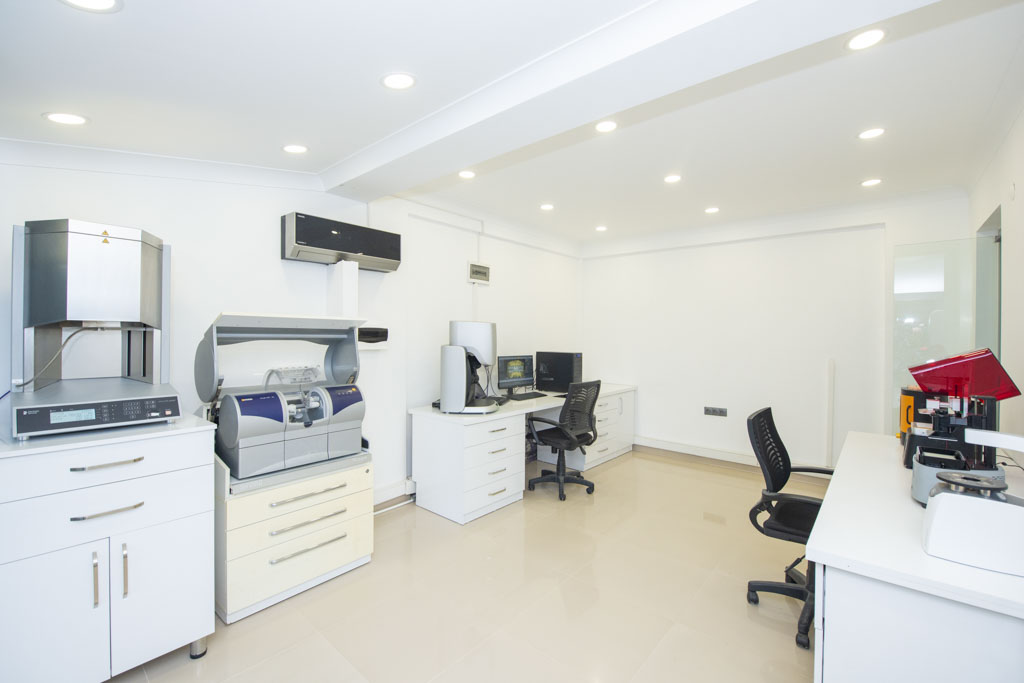
What are Digital Dentistry and CAD/CAM Systems?
Digital dentistry (CAD/CAM – Computer-Aided Design/Computer-Aided Manufacturing) is a modern approach to dental treatment where the measurement and design stages are entirely carried out using digital scanners and computer systems, replacing traditional methods. Our clinic utilizes the CEREC Primescan AC intraoral scanner, one of the most preferred systems worldwide in this field. This system minimizes the use of traditional impression trays and unpleasant impression materials, eliminating human error and producing highly aesthetic, reinforced ceramic restorations.
Who is it suitable for?
-
Patients who experience a severe gag reflex when traditional silicone impression materials are placed in their mouths,
-
Those who have time constraints and want their dental treatments (veneers, porcelain fillings, etc.) completed as quickly as possible, with a minimum number of sessions,
-
Patients who have high aesthetic expectations and demand restorations that fit their teeth with millimeter precision, without the risk of human-induced measurement errors,
-
It is suitable for all patients who will undergo inlay/onlay (porcelain filling), laminate veneer (porcelain veneer), zirconium or implant-supported crown treatment.
How does the treatment process progress?
-
Preparation: The tooth to be restored is prepared by the dentist for digital measurement, and necessary minimal adjustments are made.
-
Digital Scanning (Impression Taking): With the CEREC Primescan AC intraoral scanner, high-resolution, three-dimensional images of the teeth and surrounding tissues are transferred to a computer in seconds. No impression tray is used.
-
Computer-Aided Design (CAD): Based on the obtained 3D images, the most suitable restoration (filling or crown) is digitally designed, taking into account the patient’s jaw bite and adjacent teeth.
-
Computer-Aided Manufacturing (CAM): The designed tooth is produced by milling it with millimeter precision from reinforced ceramic or zirconium blocks in milling units in the clinic or laboratory.
-
Procedure: The prepared aesthetic restoration is permanently fixed to the patient’s tooth with special adhesive agents on the same day or as soon as possible.
Things to Consider Before Treatment
-
For a flawless scan, it is important that the tooth surfaces are clean; therefore, brushing your teeth before the procedure is recommended.
-
Given the speed offered by digital dentistry, which allows many procedures to be completed in a single session, appointment scheduling should be done in consultation with the dentist.
Things to Consider After Treatment
-
Although the reinforced ceramic restorations used are as strong as natural tooth enamel, actions that put excessive stress on the teeth, such as breaking very hard objects (like walnut shells), should be avoided.
-
Restorations produced using digital impressions have excellent gingival compatibility; to maintain this compatibility for many years, daily oral hygiene (brushing, interdental cleaning, and flossing) should not be neglected.
-
Routine 6-month dental check-ups should continue after treatment.
1. Will I experience nausea or pain during the digital scan (measurement)?
Absolutely not. The biggest advantage of the digital measuring system is the comfort it offers the patient. Since traditional dough measuring tools and large measuring spoons are not used, the gag reflex does not occur. The inside of the mouth is scanned with the help of a small camera; it’s a completely painless and comfortable procedure that takes only seconds.
2. How long does treatment take with the CAD/CAM system?
While traditional methods can take days to send impressions to the lab and undergo trials, digital dentistry minimizes the number of sessions and appointment times. Many aesthetic porcelain restorations can be produced and applied to the patient in a single session and within a few hours.
3. Are the ceramic teeth produced durable and aesthetically pleasing?
Yes. In computer-aided manufacturing (CAM), industrially prepared, high-pressure resistant, specially reinforced ceramic blocks are used. Because human-caused errors (air bubbles, shrinkage, etc.) are eliminated, they are both biocompatible and aesthetically perfect, and extremely resistant to breakage.