










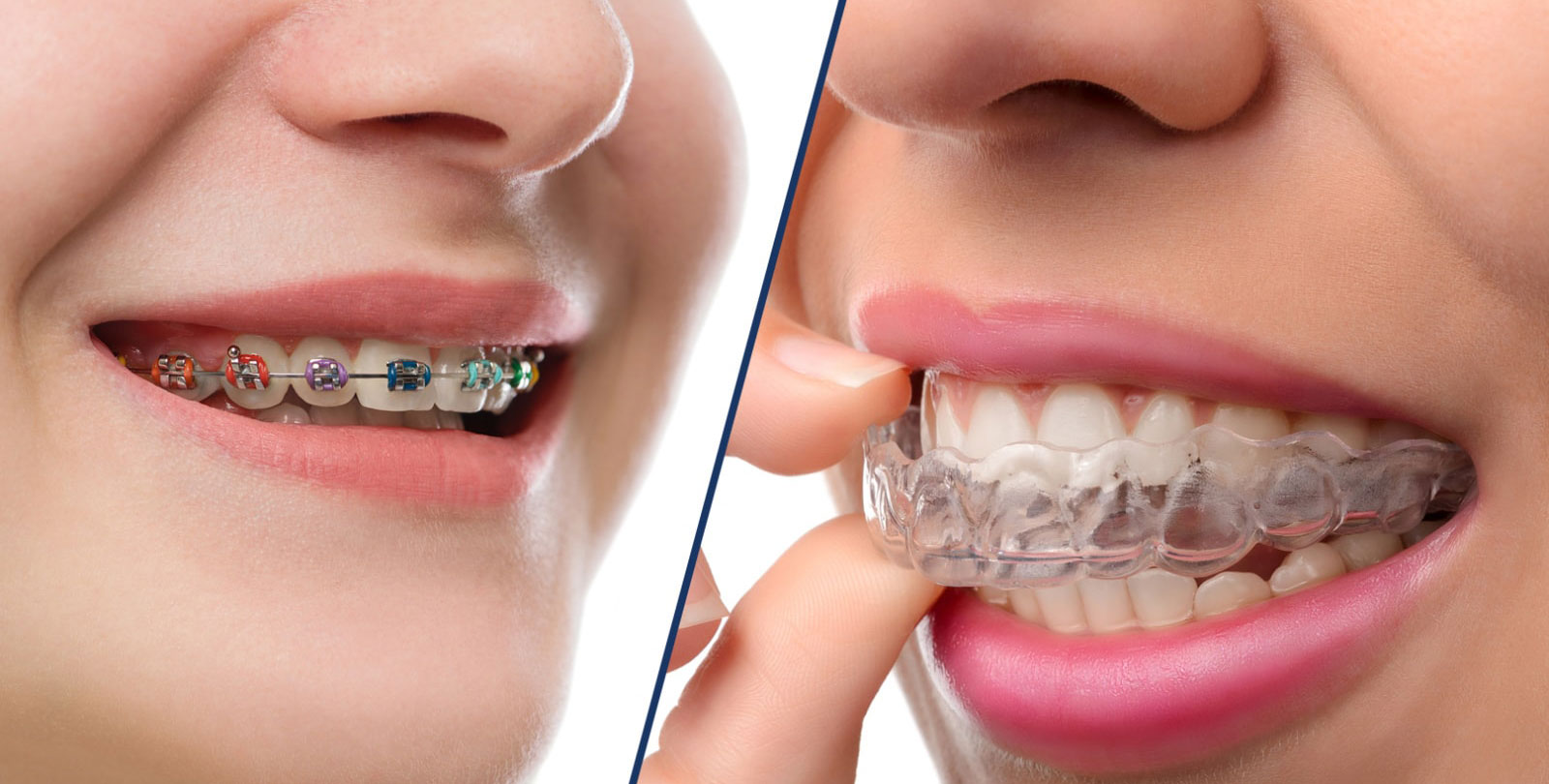
What is Orthodontic Treatment?
Orthodontics is a branch of dentistry that diagnoses and treats misalignment of the teeth, jaw abnormalities and malocclusions. Misalignment of the teeth not only causes aesthetic concerns but also makes effective brushing impossible, leading to gum disease and the rapid progression of tooth decay. Orthodontic treatments ensure that teeth are aligned in their ideal position, thereby creating a natural and aesthetically pleasing smile whilst safeguarding oral and dental health.
Who is it suitable for?
Orthodontic treatment is suitable for anyone who needs it, regardless of age. We operate on the principle that ‘whatever your age, you too have the right to an attractive smile with your own natural teeth’.
-
Children and Adolescents: In children with a narrow jaw or skeletal malocclusion during their growth and development, non-surgical skeletal modifications can be achieved through functional treatments involving orthodontic appliances.
-
Adults: This treatment is suitable for all adults who wish to improve the aesthetics of their smile, prevent tooth decay and gum problems caused by misalignment, and correct malocclusions.
How Does the Treatment Process Work?
The field of orthodontics works in constant collaboration with all other specialisms within dentistry. The process proceeds as follows:
-
Specialist Examination and Treatment Planning: A detailed examination is carried out by our orthodontist. Using digital scans and X-rays, the most suitable treatment method (fixed metal or porcelain braces, Invisalign clear aligners, etc.) is determined based on the individual’s specific case.
-
Preparation: Where necessary, any tooth decay is treated prior to orthodontic treatment and oral hygiene is brought up to the optimum standard.
-
Treatment: The selected treatment appliances (braces, brackets or clear aligners) are fitted to the patient. In cases requiring upper jaw expansion or surgery, specialised appliances are incorporated into the process.
-
Check-up Appointments: Throughout the course of treatment, clinic visits are scheduled at set intervals to monitor the movement of the teeth and make any necessary adjustments.
Points to Bear in Mind Before Treatment
-
Oral and dental hygiene must be maintained to the highest standard. Before treatment begins, any existing tartar must be removed and any cavities treated.
-
You should discuss treatment options (metal wires, aesthetic porcelain brackets or clear aligners) in detail with your dentist and choose the method that best suits your lifestyle.
-
Particularly in the case of surgical or functional jaw treatments, the pre-treatment protocols specified by the dentist must be followed to the letter.
Post-Treatment Precautions
-
Retention Process: The protective aligners or internal retention wires provided at the end of treatment to help the teeth maintain their new positions must be used strictly for the duration recommended by the dentist.
-
Oral Hygiene: Correcting misalignments will make brushing easier; however, the routine of regular brushing and cleaning between teeth must not be neglected during this process.
-
Routine Check-ups: You should continue to attend regular check-ups with your general dentist even after treatment has been fully completed. (If you are still wearing braces, you should avoid hard and sticky foods to prevent damage to the appliances.)
1. Can I have orthodontic treatment at an advanced age?
Yes, there is no age limit for orthodontic treatment. Any adult with healthy teeth and gums can achieve the smile they’ve always wanted through fixed orthodontic treatment or Invisalign (clear aligners).
2. What orthodontic treatment methods are offered at your clinic?
At our clinic, we successfully provide a range of treatments tailored to individual needs and aesthetic expectations, including fixed metal orthodontic treatments, porcelain (aesthetic) braces, Invisalign (clear aligner) treatment, upper jaw expansion, functional treatments such as orthopaedic orthodontics, and orthognathic surgery.
3. What is the difference between clear aligner (Invisalign) treatment and traditional braces?
Clear aligners offer an aesthetic and comfortable treatment that is virtually invisible to others. As they can be removed whilst eating or brushing your teeth, maintaining good oral hygiene is much easier than with traditional braces (fixed brackets). Our specialist will determine during your initial consultation whether your case is suitable for clear aligner treatment.
4. Can skeletal problems in growing children be resolved without surgery?
Yes. In children during their growth and development, jaw orthopaedics and skeletal modifications, when carried out alongside early diagnosis, can help manage and correct jaw abnormalities without the need for surgery.